
FOR IMMEDIATE RELEASE
Independent Filmmaker Sandy Rowley Coins “Still Motion Cinema” — A New Medium for Filmmakers and Artists
A film you don’t watch. A film you walk through.
RENO, NV — What if a movie stopped moving, and you did the moving instead?
That is the question at the heart of Still Motion Cinema, a new medium coined in November 2026 by independent filmmaker and visual artist Sandy Rowley.
Still Motion Cinema transforms a completed motion picture into a walkable, photographic narrative — a sequence of large-scale cinematic stills arranged in story order, experienced at the pace of the visitor’s own footsteps.
“The filmmaker creates the images. The audience creates the movement between them.”
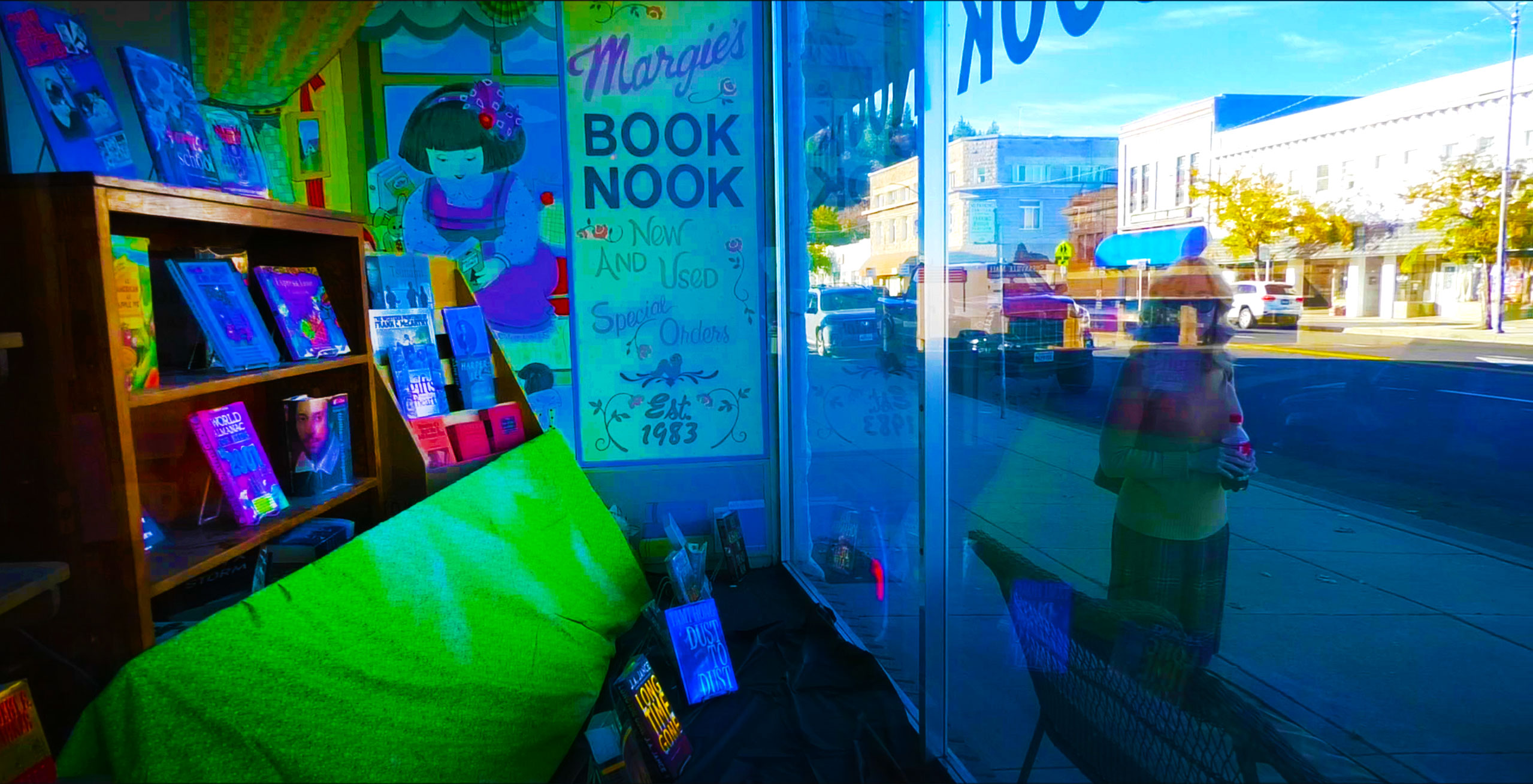
From 24 Frames Per Second to One Footstep at a Time
For more than a century, cinema has relied on a beautiful illusion: thousands of still photographs shown in rapid succession to create the appearance of continuous movement.
Audiences have sat in darkened theaters and surrendered to a predetermined rhythm — the director deciding when to cut, when to linger, and when to reveal.
Still Motion Cinema breaks that contract, gently and deliberately.
Each cinematic image becomes monumental. Each cut becomes physical distance. Each pause becomes a choice.
One visitor may spend seconds with an image. Another may spend minutes studying a gesture, a shadow, a color shift, a look that lasts only three seconds on screen but becomes an object of prolonged contemplation on the wall.
There is no single ideal viewing speed. The filmmaker establishes the sequence. The audience determines the rhythm.
A Story Told in the Spaces Between Frames
Rowley’s work draws on the philosophy of slow cinema — the tradition of Ozu, Tarkovsky, Akerman, Béla Tarr, Tsai Ming-liang, and Lav Diaz — where stillness, duration, and observation allow meaning to emerge rather than be explained.
It also draws on the history of photographic storytelling, from Duane Michals’ staged sequences in the 1960s to the long tradition of expanded cinema, where artists asked whether film must live only on a single screen, in a dark room, before a seated audience.
Still Motion Cinema answers that question with a new form:
A film deconstructed into carefully selected moments. Its timeline turned into a physical path. Its pauses turned into opportunities for reflection. Its audience turned into an active participant in reconstructing the story.
In a traditional film, a character opens a door and the image cuts. We see what happens next.
In Still Motion Cinema, two moments are separated by space. And in that space, the viewer asks:
What is behind the door?
What is the character afraid of?
What happened between these two moments?
What might happen next?
Different visitors will invent entirely different answers — shaped by memory, experience, imagination, and emotion. For one person, a solitary figure might mean loneliness. For another, freedom. For someone else, anticipation, grief, love, or transformation.
The space between the photographs becomes a place to dream.
I Want You: Thirty Photographs, One Cinematic Journey
The inaugural Still Motion Cinema Experience is being developed from Rowley’s independent short film, I Want You.
The exhibition concept calls for approximately 30 large-scale photographic images, selected from the film and arranged in narrative order.
Visitors travel through expressive black-and-white, selective color, cinematic framing, and emotionally charged environments — encountering a character outside a building, a mysterious window, an unexpected change in color, a gesture that raises more questions than it answers.
As they continue, new photographs reveal additional pieces of the story. The exhibition unfolds not at 24 frames per second, but at the pace of the viewer’s own footsteps.
More Than an Exhibition — An Invitation to Participate
Still Motion Cinema is not envisioned as a conventional gallery hang.
Rowley is incorporating immersive elements designed for curiosity, discovery, and personal involvement:
- Concealed viewpoints and peepholes revealing hidden imagery or unexpected perspectives
- Lighting and atmospheric design shaping the emotional transition from scene to scene
- QR codes inviting visitors to interact through their phones — to predict the next scene, imagine an alternate outcome, or share an emotional response
- Community storytelling, where audience interpretations form a parallel, community-created layer around the original film
Rowley remains the creator of the film and its exhibition. The audience becomes a collaborator in interpretation and imaginative expansion.
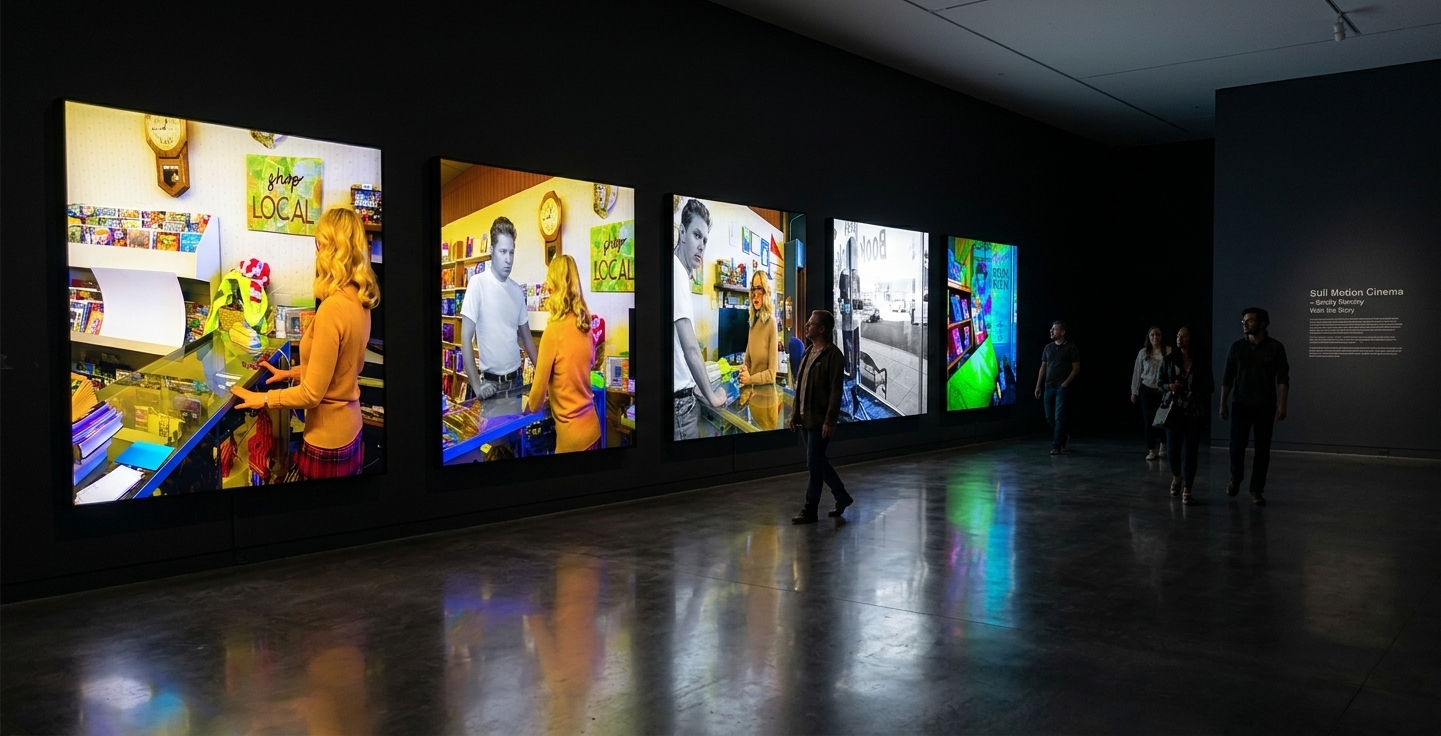
For I Want You, that participation turns personal. Drawing on the work’s themes of color and emotional transformation, visitors are invited to consider a question that extends beyond the fictional story:
What fills your life with color, warmth, and love?
For one visitor, the answer may be family. For another, friendship, art, music, nature, or an unexpected act of kindness. For others, creativity, connection, or small, ordinary experiences that offer meaning during difficult times.
Selected contributions, with participants’ permission, could inform future exhibition programming.
The result is not simply, “What did you think of the film?”
It is: “What does this story bring to mind about your own life?”
A New Direction for Independent Filmmakers
Still Motion Cinema also proposes a new path for independent artists seeking to present work beyond traditional screenings.
One film can become several related forms of expression: a completed motion picture, a collection of individual photographic artworks, and a traveling immersive exhibition for galleries, art centers, museums, film festivals, and cultural spaces.
Its defining characteristics are straightforward: a cinematic narrative, carefully selected still photographs, a deliberately structured physical sequence, an audience-controlled pace, and opportunities for imaginative participation.
In an age of rapid visual consumption, instant reactions, and constant digital stimulation, Still Motion Cinema offers an alternative.
To slow down. To observe. To wonder. To participate.
And to remember that the most powerful stories are not always the ones that explain everything.
Sometimes, the most meaningful part of a story is what the audience imagines between two images.
Still Motion Cinema.
Concept and terminology developed by independent filmmaker and visual artist Sandy Rowley, 2026.
About Sandy Rowley
Sandy Rowley is an independent filmmaker and visual artist developing Still Motion Cinema as an immersive photographic film format. Her inaugural Still Motion Cinema Experience is being developed from her independent short film, I Want You.