Reno Marketing Calculator
Simple formula to determine ideal marketing budget online.
What is your desired increase in revenue for the next 12 months?
$500,000.
What does it cost to acquire one customer?
Most companies spend anywhere from $25 – $300 per customer.
Take your revenue goes and divide by cost to acquire one customer. This will be your marketing budget.
Or another, easier way to determine the best marketing budget is to do the following:
10% Percent of Gross Revenue is a good starting point for a marketing budget for most companies.
How to Create a Killer Digital Marketing Plan for Your Business
Every business needs to think about their marketing efforts. There are many things businesses can do to ensure the success of their marketing plans such as SEO, paid advertising, social media, and more.
But before business can put any of these things to work, they need a clear digital marketing plan.
In this article, we will show you how to get yours in motion. Let’s get started.
RSVP for our Reno Nv Marketing Workshop here: TBD. Follow us on Meetup to see our next marketing support groups, networking events and live digital marketing workshops.
Know Your Audience
Before you begin your marketing strategy, you need to identify who your audience is. Different audiences respond better to certain tactics, so a marketing strategy is not one size fits all.
Both need to work hand in hand to determine what your target audience will respond better to.
For example, if your audience is women in their 20s and 30s, your campaign should include more social media tactics. On the other hand, if your audience is men in their 60s and up, you wouldn’t focus all your efforts on social media.
Set a Clear Objective
After you’ve identified who you want to target, it’s time to set clear objectives.
Answer the question, what do you want your marketing strategy to achieve? In order to effectively answer the question, you need to have a defined mission and objectives.
Measure the Effectiveness of Your Plan
You need always to measure the effectiveness of your marketing strategy. How can this be possible?
It can be done by choosing monitoring tools and keeping a close eye on them.
For example, at the beginning of your strategy, you might want to set KPI’s and measure their effectiveness.
Whatever other tools you should measure the effectiveness of your strategy, you need to ensure you keep an eye on it.
Learn From the Past Mistakes
Unless your business is brand new, chances are you’ve created a marketing strategy before.
And while you might be tempted to carry on some of the tactics that worked for you before, you must also learn from your past mistakes.
Knowing the previous failures of your marketing strategy will help you identify what not to do in the future.
The more information you make, the more successful your new strategy will be.
Set a Budget
This one is one of the most important tips to keep in mind. When coming up with a marketing plan, you need to always stick to your budget.
If you’re going to outsource to a marketing agency, make sure you discuss the budgets in the early meetings.
Determine how much you want to spend on paid promotion such as banners and pay per click.
Make a Plan but Allow for Detours
Finally, while it’s important you make a plan from the beginning, allow for some flexibility.
If something doesn’t seem to be working out, go ahead and change it.
Create a Digital Marketing Plan: The Bottom Line
Now that you know more about creating a digital marketing plan, you can get started and give it a try.
Remember to identify your audience, set a budget, and make a plan.
If you enjoyed these tips and would like to learn more about marketing tips, visit the marketing section of our blog.
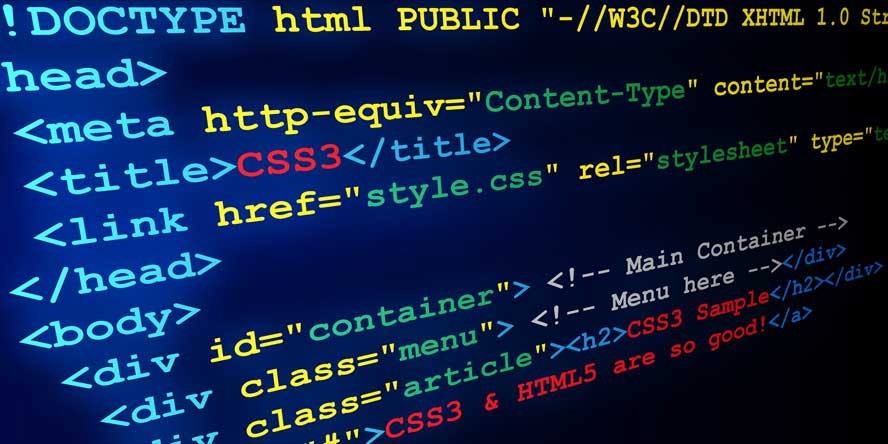
5 Essential HTML Text Codes for Boosting Your Website’s SEO
Did you know that 93% of website visits begin in a search engine? Organic results get 70% of the clicks too. If you want a piece of that pie you better make sure your website shows up and performs well.
How?
Optimize your website with HTML text codes that the search engines love. Keep reading to learn the best SEO code to use.
HTML Text Codes: The Page Head
Meta tags are in the section of your websites HTML code. Google reads both HTML and XHTML meta tags.
They inform search engines and users what to expect from your page. But keep in mind, Google ignores tags that it doesn’t understand.
Here are the meta tags you should make sure are in every page’s HTML code.
Title Tag:
The title tag is one of the most important HTML codes for increasing your visits. The title tag shows up as the main title for your page in search engine listings and on social media shares. It’s your page’s first impression; make it count!
You should include the keywords that you’re targeting with that page in the title. Get creative with this so that it also draws the searcher in and nudges them to click it. Knowing a little psychology helps with writing title tags that work hard for your business.
Keep your title tag around 50 to 60 characters because any more than that will truncate in Google. You’ll also want every title tag to be unique.
Meta Description:
The meta description tag contains the content that’s shown in the snippet on search engine results. Keep your description to 150 to 160 characters, about two sentences. Include your target keyword again.
A well-crafted description should let consumers know that your content can answer their question. Matching search intent will get you higher click-through rates and lower your bounce rates.
Speaking of bounce rates, keep them low by making sure that your page content delivers what you’re promising in the title and description.
Content Header Tags:
People often confuse the terms that refer to the main title of a piece of content with the head tag that appears in HTML code. It’s not hard to understand why, since they’re both called header tags.
However, the H1 tag here refers to the bold, enlarged title at the top of a page containing content underneath. There is also H2 tags, H3 tags, and so on. Each descending tag ranks as less important and appears a bit smaller.
Content header tags provide visual organization of content and increase usability. Google factors usability into rankings. H1 tags also signal to search engines the most important piece of information on a page.
Image Tags:
Describe what your image is with image tags. They’re an important indicator for screen readers, increasing your accessibility factor in search engine rankings. They also help image spiders learn what the image is.
If you’d like your graphics to rank in image results, include the alt and title tag in your HTML code. Use your relevant keyword in the image tags, as well as in the image name.
Avoiding Duplicate Content:<rel=”canonical”></rel=”canonical”>
If you have pages that are similar in content, set one of them as the preferred version with a canonical tag. Doing so avoids a potential duplicate content penalty with the search engines.
A canonical URL is also used to consolidate page ranking for websites that syndicate their content.
What’s Next?
Get started going through your code page-by-page and applying the HTML text codes above. Keep track of your changes and ranking results so you can see what’s working.
If this all seems overwhelming and you’d like some expert help with it, contact us for a free SEO audit.
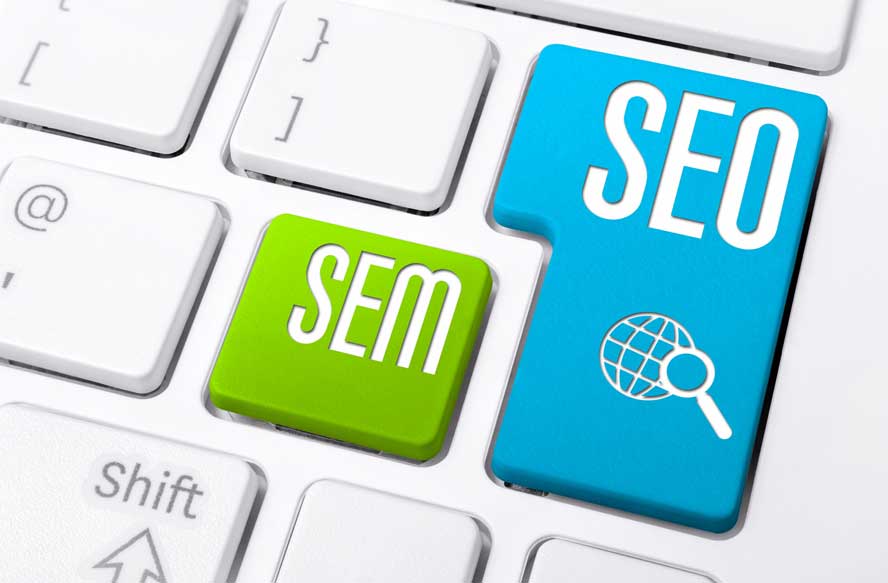
SEO and SEM: What’s the Difference and Do I Need Them?
Search Engine Optimization (SEO) is fast becoming a US$80 billion dollar industry.
Search ad revenue – the major component of Search Engine Marketing (SEM) – may only be around half that amount, but $40 billion is nothing to sneeze at.
Yet despite how monumentally massive these industries are, there is still a lot of confusion around what these terms mean.
Let’s take a brief look at SEO and SEM, their differences and the definitions of each.
What is Search Engine Optimization?
SEO is a method of optimizing a webpage so that it will attract more organic traffic. By organic traffic, I’m referring to users who find a website through a search engine.
Technically, SEO caters to all search engines, including Duckduck Go, Yahoo, and Bing. In reality, however, virtually all SEO focuses on the kingpin: Google.
Google is notorious for changing their algorithms in a tireless attempt to make the searching experience as effective as possible for the end user. As a result, SEO techniques are evolving rapidly.
Two things remain constant, however: The concepts of on-page and off-page optimization.
What is On-page Optimization?
As the name suggests, on page optimization is undertaken within the website itself. Essentially, these are tricks of the trade that SEO savvy content writers and web designs use to improve the Search Engine Results Pages (SERP) ranking of their article.
- Using targeted keywords in the title and headings of their article.
- Peppering secondary keywords throughout the article in a natural way.
- Achieving the highest possible page load time.
- Including photos which have been SEO optimized by way of file size, file name, and alt tags.
- User-friendly formatting with ample white space.
- Social media sharing plugins.
- Quality content that provides real value for the reader.
What is Off-page Optimization?
Off-page refers to techniques undertaken outside the website. Behind the scenes, if you will.
- Link building by obtaining inbound links (backlinks) from other reputable websites.
- Driving traffic through social media, A.K.A social signals.
What is Search Engine Marketing?
SEM is when a marketer pays a search engine (almost always Google Ad Words) to promote their product to a wider audience.
You’ve probably noticed results at the top of Google marked “[Ad].” These are an example of a pay-per-click (PPC) or cost-per-click (CPC) advertisement, which is a critical component of SEM.
SEM once referred to both SEO and PPC advertisements, although these days there is a clear distinction between the two.
Other aspects of SEM include:
- Targeted advertising campaigns.
- Advertisement groups with a focus on keyword variations.
- Writing keyword rich ad copy.
- Monitoring marketing metrics such as click-through rates and average costs per click.
SEO vs. SEM: Which is Better?
Each excels at different things.
SEO is more of a long game. The practice may not see instant results, but if done correctly, it can result in a considerable amount of organic traffic over time.
SEM, on the other hand, is capable of earning a website fast exposure which is great for short term campaigns or new companies looking to start trading with a bang.
Big online businesses incorporate both, as the two complement each other nicely.
SEO and SEM: Do I Need Them?
SEO is an essential practice for anyone looking to make money through a website. After all, if you can’t hit the front page of Google, then do you really exist?
SEM is a little more variable. If done right, it can drive massive short-term traffic to your business, but for a price.
Who Can Help Me Create an SEO/SEM Marketing Strategy?
Reno Web Design are experts at both SEO and SEM marketing. Get in touch with them today to discuss an affordable and effective online marketing plan for your business.
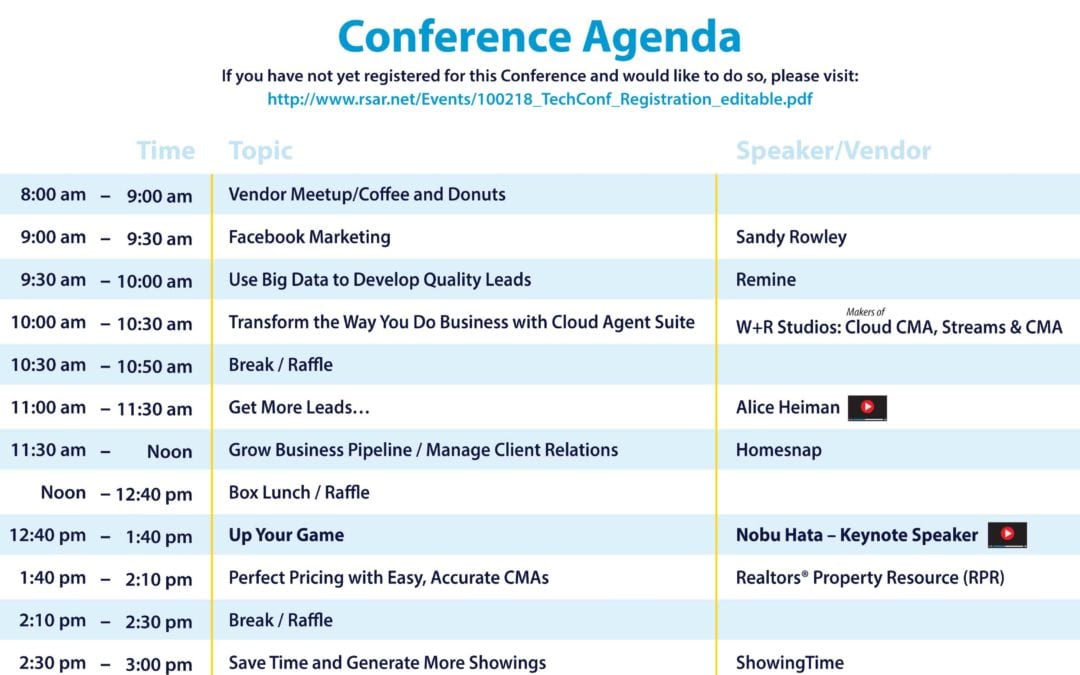
Reno Marketing Event : Association of Realtors
Tuesday, October 2, 2018
8 am to 5 pm / 5650 Riggins Ct, Reno, NV
Vendor Meetup/Coffee and Donuts
Facebook Marketing with Leading Online Marketing Expert, Sandy Rowley
Use Big Data to Develop Quality Leads
Transform the Way You Do Business with Cloud Agent Suite
Break / Raffle
Get More Leads…
Grow Business Pipeline / Manage Client Relations
Box Lunch / Raffle
Up Your Game
Perfect Pricing with Easy, Accurate CMAs
Break / Raffle
Save Time and Generate More Showings
Using the Parcel Map for Fun & Profit
Break / Raffle
Advertising in Compliance with RED
Video Marketing Tools & Techniques
Wrap Up / Questions / Vendors Available until 6 pm
Sandy Rowley
Remine
Alice Heiman
Homesnap
Nobu Hata – Keynote Speaker
Realtors® Property Resource (RPR)
ShowingTime
CRS Data
Scott Beaudry & Jan Holle
Scott Beaudry
Conference Agenda
Time Topic Speaker/Vendor
If you have not yet registered for this Conference and would like to do so, please visit:
https://www.rsar.net/Events/100218_TechConf_Registration_editable.pdf
Makers of
W+R Studios: Cloud CMA, Streams & CMA
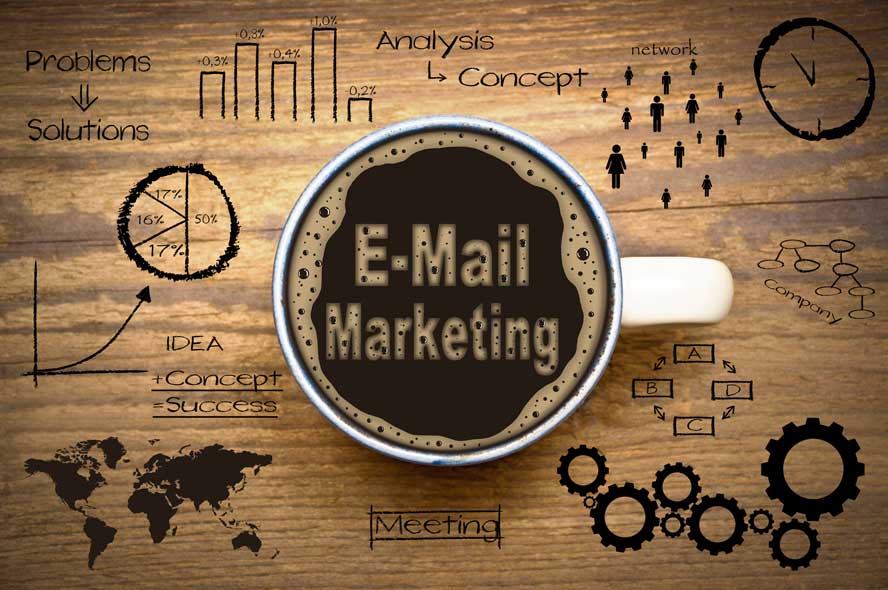
6 Mind-Blowing Statistics About Promotional Email Marketing
Believe it or not, a shockingly high number of people are reading spam emails that come into their inbox.
While some of these are opt-in emails and others are true spam, most people don’t know a promotional email from an attempt to steal their credit card number. If you understand email marketing, you might realize that there’s a way to connect with customers on a deeper level if you try email.
Here are six statistics about email marketing that might just blow your mind.
1. Crazy Growth
As of now, there are more than 3.7 billion email users all around the globe. That should grow beyond 4 billion in the next three years, which will place email usage as extending well over half of the population of the planet.
As email continues to grow, new ways to market with email will be discovered. While spam filters will develop, so will the ways that marketers find to reach out to their audience.
2. So Many Emails Sent
There are around 270 billion emails sent every day just in the world of business and consumer interests. It’s set to grow year after year by more than 4%, which means in just a few years, we’re talking 320 billion emails.
The number of emails that are set to be sent won’t be slowing down any time soon. As the number of users grows, email will evolve and find ways into all of our devices and wearables.
3. High Rolling
Email marketing has quickly become a costly affair, growing even faster than the user base. While it only accounted for about $2 billion in spending in 2014, it’s now about to grow beyond $3 billion. With this kind of growth, it’s too big of a market to ignore.
If you’re not taking advantage of email marketing, you need to grab the wheel.
4. Great ROI
Email has a higher median ROI than most forms of promotion. Marketing typically gives you an ROI of around 30-40%. With email, you can go as high as 120%. And given it’s so cheap, you’d be silly not to take advantage of it.
5. Business is Booming, Thanks to Email
Productivity is up, profits are rising, and email use is higher than ever. If you own a business, it’s more than likely that you’re using email for your business communications.
Nearly 90% of professionals claim to use it when they’re conducting business or communicating professionally.
6. It’s How You Generate Leads
While lead generation used to entail a lot of conversations, trade shows, and cold calling, much of that has dropped off thanks to promotional emails. Promotional emails allow you to interact with customers, make offers, and receive feedback all in one message.
With nearly 90% of marketers using email to generate leads, it’s a great place for you to start.
You Can Get a Lot From a Promotional Email
If you haven’t tried using promotional email as a marketing tactic for your business, you’re missing you. The potential returns you get from email marketing are too high to not take advantage of.
If you want to find more inexpensive ways to drive profits, check out this guide to taking advantage of search engines.
5 PPC Advertising Benefits That are Boosting Company Profits
In 2017, 84% of businesses that used pay per click marketing (PPC) reported success, compared to just 1% who reported no valuable return.
Can you afford to not be using this high-converting, super-targeted, budget-friendly form of marketing?
If you’re still not sure whether this is the right marketing strategy for you, then check out these advertising benefits of PPC.
Advertising Benefits of PPC
Many managers will see ‘Pay Per Click’ and hear the word ‘expensive’ ringing in their ears.
However, there are many advantages to using PPC for advertising – not least that it’s actually much cheaper and more budget-friendly than you may think.
1. Immediate Visible Results
PPC campaigns deliver immediate trackable results. You can see what’s working, what isn’t working, and control your campaigns based on near real-time data.
You can set goals for your PPC campaigns to see the exact efficacy of each campaign. For example, if a campaign aims to get people to add a certain product to their basket, you can see if they do this.
2. Highly Targeted Audiences for Improved ROI
You can tailor your PPC campaign to as specific an audience as you like. This helps you to control costs, but also means that only the most relevant potential customers will see your advert.
The more targeted an audience that sees your advertisement, the higher the return on your investment. Traditional advertising, such as a billboard or commercial, is paid for regardless of who sees it. PPC advertising is only shown to those who are already looking to buy your product.
3. Higher Brand Awareness
Even if people don’t click, they’re going to see your brand advert for their related search query.
People searching for your products and services will see your brand advertised when their search results come up. This means that your brand awareness will rocket – and with the right audience, too.
4. Great Budget Control
You can switch a PPC campaign on or off at the click of a mouse. If your product promotion has ended, for example, then that campaign can be ended.
If you’re not seeing the results you need, then you can pause a campaign while you study the data to tweak and improve the targeting. You’re not spending money on advertising that you know isn’t working.
5. Create a Goldmine of Data
For every campaign that does – and doesn’t – work, you’re going to find out more about how your ideal customer ticks.
You’ll be able to see which high-performing keywords in adverts are driving your customers to your website. You can see where they go once they’re on your site – and what other products and services they look at other than the one advertised.
You can even see the time of day your advert is most successful, the audience demographic, and the PPC channels which drive the most customers.
This data will improve your offline and SEO marketing as you learn more and more about your customers.
Why PPC Needs Great Web Design
The advertising benefits of PPC means a high number of visitors will come to your website – but if your site isn’t easy to use, you might as well just burn money.
You need to make sure that your web design provides an engaging and easy user experience for anyone that visits via your PPC campaign.
Talk to us to find out more about how we can help improve your web design to improve your sales conversions.
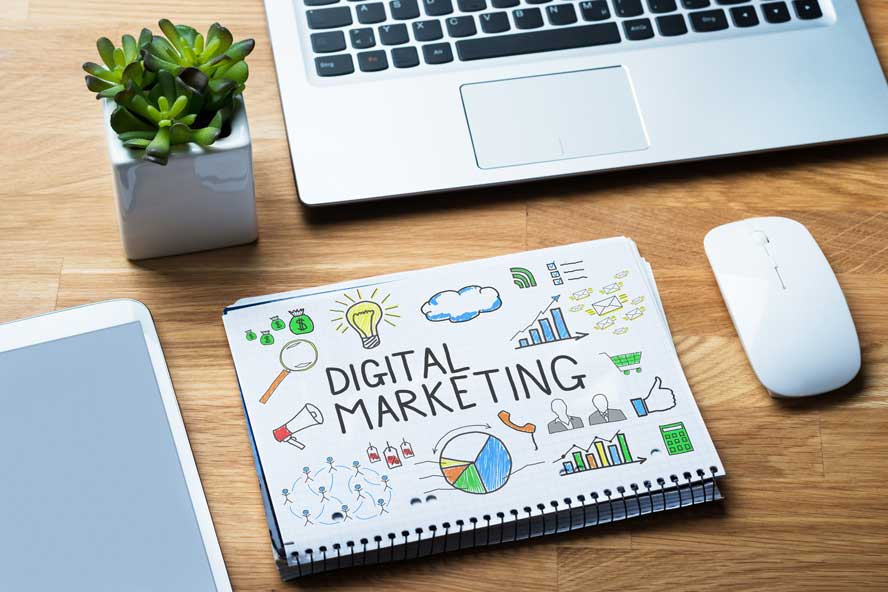
Traditional vs Digital Marketing: What’s the Best Approach to Capturing Today’s Market?
Is traditional marketing dead?
Marketers have been predicting the demise of traditional marketing since the late 90s. But turn on your TV or listen to your car radio. Companies still pay for tv commercials and radio ads.
The same is true for print advertising. Newspapers and magazines haven’t gone the way of Betamax. Flyers, posters, brochures, and so on are still alive and kicking.
So why do some marketers insist that digital marketing is the only way to go? Let’s talk about the whole traditional vs digital marketing thing in detail. This way, you can choose which is better for your business.
Traditional Marketing Pros and Cons
One of the advantages of traditional marketing is how easy it is to understand. That comes from years and years of exposure.
Everyone has seen a commercial or a mailbox flyer. That includes millennials who can’t seem to figure out rotary phones.
For your marketing goals, it means two things. Using traditional modes of marketing means it’s a sure way to reach your local audience. It also offers tangibility.
There’s nothing like a good business card your customers can keep with them. It’s a good reminder of your brand – something they can look at and not mindlessly scroll through.
Of course, it’s not without disadvantages. The costs alone will make you think twice about print or radio advertisements. Print advertising costs can add up when you pay people to distribute your materials.
Another thing you have to worry about is tracking results. Did your flyers make the right impression? It’s not so transparent compared to the number of likes or website visits.
Digital Marketing vs Traditional Marketing
The great thing about digital marketing is it’s accessible. It doesn’t matter how big or little your marketing budget is. There’s a digital marketing strategy that will work for you.
With TV ads, for example, you’ll have to set aside a huge chunk of your budget. Otherwise, TV stations won’t air your ad. That’s not a problem for Google or Facebook ads.
You set your budget and get real-time results on how your campaigns are doing. If your ads aren’t doing well, pause or stop them. Come out with new ads and try again.
Also, nothing beats social media marketing for sharing your message as fast as you want it. It’s as quick as a click of a button. You can’t get the same results with brochures or billboards.
Online, it’s an even playing level field. All you need is a solid digital marketing strategy.
Traditional vs Digital Marketing: Who Wins?
The truth is no business can afford to not be online. You’ll be losing a huge chunk of potential customers if you don’t have a website. A strong social media presence is a must, too.
But if there are traditional means of marketing that work for your business, keep using them. Just make sure you don’t use up all your money for your traditional marketing materials.
Bottom line: don’t think of it as traditional vs digital marketing. If you want the most bang for your buck, think digital first. When you have more money to spend, experiment with traditional forms of advertising.
But don’t forget to track your results. If you need help with digital marketing, don’t hesitate to contact us.
A Basic Technical SEO Guide for Website Design
As most small businesses are set to spend around $75,000 on digital marketing this year, they need to make every dollar count in that budget. Using search engine optimization is a way to pivot your page to be found by search engines, which is as good as free promotion. Search engine optimization, notably technical SEO is important in making yourself known to users.
Here are five elements of technical SEO that you need to implement.
1. Page Speed is a Major Factor
When you’re using mobile, the speed of your page gets weighed into how good your site is as a match for users. It lets search engines know that it’s optimized, updated, and you’ve tried to streamline the code base.
If you’re thinking about user experience, page speed matters as well. When users rank how well a site works for them, they will factor in load time. If it doesn’t load within three seconds, they’ll consider it a bad match that doesn’t give them what they want. Isn’t that the ultimate aim of user experience?
2. Bot Instructions Are Case Sensitive
If you’re giving robots instructions for your site, you need to ensure that you take case into consideration. Instructions in your robots.txt file need to be all lowercase.
If you play with case, you change the way the information is going to be processed.
Web crawlers, the tool that search engines use to index every site on the internet, look for files on your main directory. If you hide them somewhere else, they may never get read.
3. You Need Infinite Scroll
You want your site to be designed in such a way as to load content as your user scrolls. When they’re going down your website’s pages, you don’t want the content to stop.
Paginated pages combined with a very long scroll will help users to keep reading and staying productive on your site. If new content is constantly available, you’ll rank much higher than your competitor’s site.
4. Sitemap is What You Want
While Google needs sitemaps to be in an XML format, that’s pretty much the only stipulation to worry about when setting up your sitemap. Your hierarchy or your structure can look however you want it to look.
When you choose a sitemap that works for you and makes sense, you make it easier for search engines to scroll through your site. As long as there’s simple logic, you can structure it however you please.
5. Your Homepage Matter
Your homepage needs to have everything that you want search engines to find out about you. Because search engines look at that page first, you want your site to be ranked fairly.
You can have other sites ranked as well so long as you include a link from your front page.
Understanding Technical SEO is an Advantage
If you want to have a strong advantage on your competition, you need to take advantage of what technical SEO has to offer. When you optimize your site for crawling and indexing, you make yourself that much easier to find by your potential clients.
If you want to audit your SEO ranking, check out our guide
or chat with Sandy today. Call 775-870-0488.